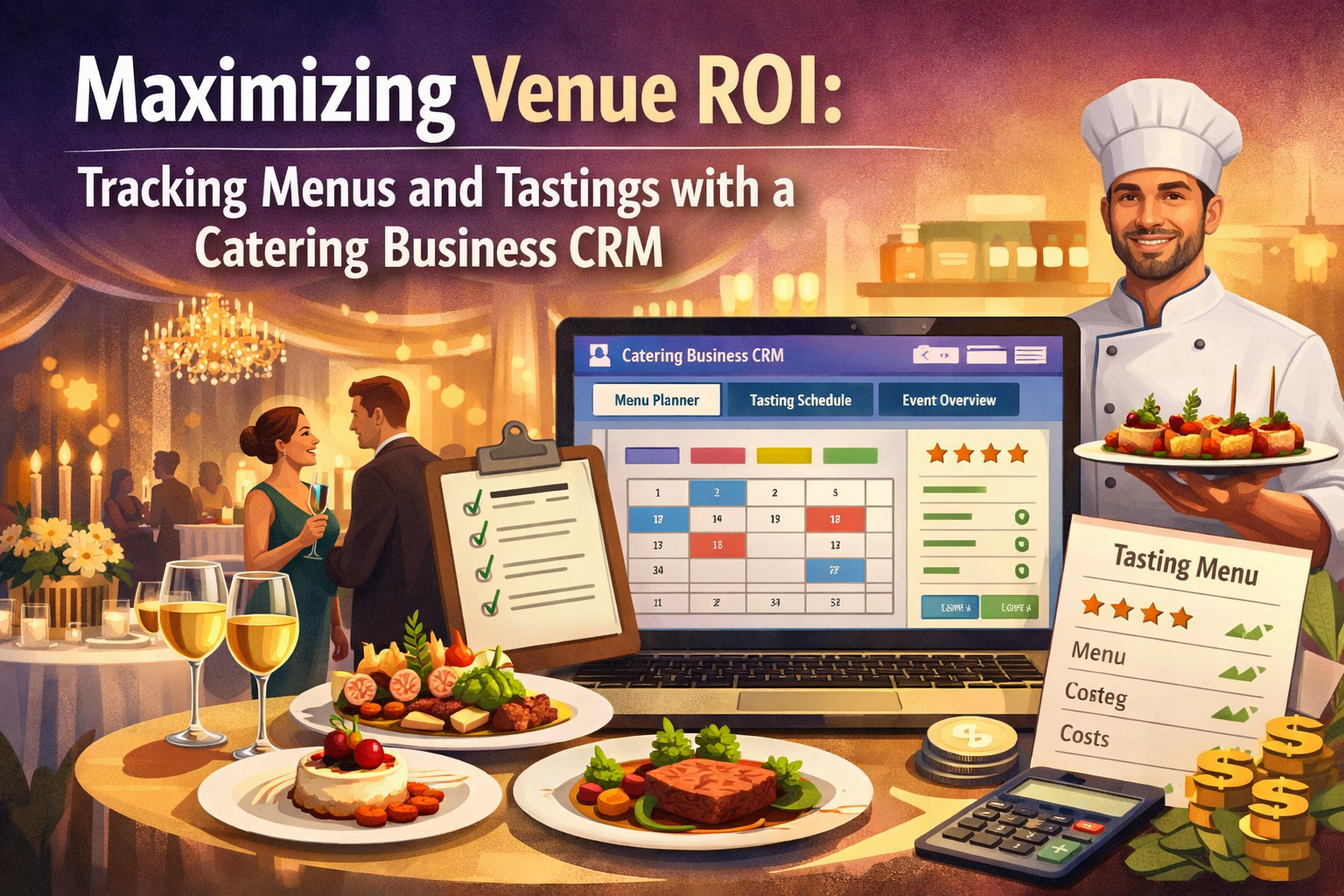
Boost your commercial real estate venue’s revenue. Discover how a Catering Business CRM streamlines menus and tastings for property managers and investors.
Table of Contents
I’ve walked through hundreds of raw commercial spaces in my career. The one thing that separates an empty, echoing warehouse from a multi-million dollar, fully booked event venue is organization. If you own an event space, your preferred vendors literally make or break your reputation. Managing food tastings, allergy requests, and changing menus on a shared spreadsheet is a recipe for a total disaster. That’s why the savviest property owners are requiring their in-house hospitality teams to use a dedicated Catering Business CRM. It completely transforms how you handle the food and beverage side of your real estate investments, turning chaotic kitchens into profit centers.
How a Catering Business CRM Elevates Commercial Venues
When an investor purchases a historic building to convert into a wedding or corporate event space, they are entering the hospitality business. You are no longer just collecting rent; you are selling an experience. When you integrate a Catering Business CRM into your operations, you immediately upgrade that experience.
Think about the high-end clients booking your space. They expect perfection. Standard commercial real estate software handles the lease and the floor plans, but it drops the ball on the details of the actual event. Using a Catering Business CRM ensures that the dietary restrictions of the bride’s mother or the CEO’s preference for a specific vintage of wine are locked in stone and communicated to the chef automatically.
Bridging the Gap Between Real Estate and Hospitality
We see this crossover heavily in luxury residential real estate as well. Massive community clubhouses and high-rise amenity decks often have an in-house chef or an exclusive vendor list. Property managers need a way to oversee these operations without micromanaging the kitchen staff.
By demanding your vendors operate on a specialized system, you protect your investment property from amateur mistakes. If an open flame is required for a specific menu item, the software flags it, allowing your management team to double-check the fire codes and insurance riders before the event date arrives.
Streamlining Tastings with a Catering Business CRM
Let’s talk about the sales pipeline. In the venue world, the tasting is the equivalent of the property tour. It’s where the deal is won or lost. This is where a Catering Business CRM truly shines.
Instead of an event director scribbling notes on a legal pad while a couple argues over the merits of chicken versus fish, the entire tasting process is digitized. Inside a Catering Business CRM, every tasting is logged as a specific milestone in the client’s journey. You can pull up an iPad, input their feedback on the appetizers in real-time, and instantly generate an updated proposal before they even leave the building.
The Power of Data in the Buyer’s Market
Right now, we are seeing a shift toward a buyer’s market in the event space industry. Clients have options, and they are taking their time. They want customization.
- Menu Tracking: Easily duplicate past successful menus and tweak them for new clients.
- Cost Analysis: Instantly see how swapping a filet for a sirloin impacts the overall profit margin of the venue rental.
- Allergy Alerts: Bold, unmissable notifications for severe allergies attached to specific guest profiles.
By utilizing a Catering Business CRM, your event director looks like a genius who remembers every detail, which dramatically increases the conversion rate from a “maybe” to a signed contract and a cashed deposit.
Organizing Massive Real Estate Events
It’s not just venue owners who benefit. Large brokerages frequently host massive client appreciation galas or mega open house events to drum up leads in a sluggish housing market. If the food is cold or the bar runs out of ice, nobody is going to remember the beautiful crown molding in the living room; they’ll just remember the bad service.
Planning these large-scale networking events requires precision. In fact, the National Association of Realtors (NAR) frequently highlights the importance of community events for building a long-term referral network. The data stored in your Catering Business CRM helps you forecast exactly how much food you need based on the RSVP list, preventing you from overspending your marketing budget on unneeded appetizers.
Standardizing Your Real Estate Portfolio
If you are an investor scaling up, you might own three or four different venues across the state. Trying to manage the unique menus, preferred caterers, and tasting schedules for multiple locations will make your head spin.
Scaling requires systems. A Catering Business CRM provides a standardized workflow across all your properties. You can log in from your phone and see that Venue A has three tastings scheduled for Saturday, while Venue B just finalized a $50,000 corporate gala menu. It gives you a bird’s-eye view of your hospitality revenue stream without having to bother your on-site managers for constant updates.
Protecting Your Commercial Lease Agreements
When you lease your commercial kitchen to an outside catering company, you take on risk. Grease trap maintenance, equipment usage, and sanitation are major concerns.
Interestingly, when you mandate a Catering Business CRM for your preferred vendors, you gain visibility into their volume. You know exactly how many events they are running out of your kitchen. This data is invaluable when it comes time to renegotiate their commercial lease or adjust their revenue-share agreement. It takes the emotion out of the negotiation and replaces it with hard facts.
The Intersection of Billing and Menus
One of the biggest friction points in closing a venue deal is the final invoice. Clients hate surprises. Often, the venue rental fee is managed in one system, while the food costs are tracked in another.
A specialized Catering Business CRM bridges this gap seamlessly. When a client requests a last-minute addition of a late-night taco bar to their wedding menu, the system immediately updates the master invoice. There is no guessing game. During the final days of escrow—or in this case, the final payment deadline before the event—your Catering Business CRM will track the exact cost, log the payments, and ensure that your property management team and the kitchen staff are on the exact same page. For a deeper understanding of how commercial properties operate fundamentally, you can review the Wikipedia page on Commercial property.
Final Thoughts on Upgrading Your Tech Stack
Technology in the real estate world is moving incredibly fast. We are long past the days when a simple property management tool was enough to run a multifaceted event space. If your building generates revenue through hospitality, you need software built for hospitality.
Implementing a Catering Business CRM is the ultimate way to protect your asset, streamline your staff’s workflow, and provide an unforgettable experience for your clients. Whether you are managing a single luxury clubhouse or a massive portfolio of wedding venues, taking control of your menus and tastings is the fastest route to maximizing your ROI. Stop fighting with spreadsheets and start letting your systems do the heavy lifting!
FAQ Section
1. Can a Catering Business CRM integrate with my existing property management software? Yes, most top-tier platforms offer API integrations or Zapier connections. This allows you to sync your event dates, client contact info, and final invoices directly with your main accounting or real estate software.
2. Is it worth the cost if I only host a few events a month? Absolutely. Even a small number of events requires meticulous organization to be profitable. The software prevents costly mistakes, like ordering too much inventory or forgetting to bill for a premium menu upgrade, which easily covers the monthly subscription fee.
3. Does a Catering Business CRM help with commercial leases? Indirectly, yes. If you lease your kitchen to a caterer based on a percentage of their sales, the software provides an accurate, transparent ledger of all their menu items and event totals, ensuring your revenue-share is calculated correctly.
4. How does this software improve the client tasting experience? It digitizes the feedback loop. Instead of messy paperwork, clients can digitally review their proposed menu, make notes on specific dishes they tasted, and approve the final selections, which creates a highly professional and modern experience.
5. We are a real estate brokerage hosting an open house; can we use this? While built for venues and caterers, brokerages that host massive, catered events frequently use this software to track vendor contracts, manage RSVPs, and keep strict control over their event marketing budgets.
