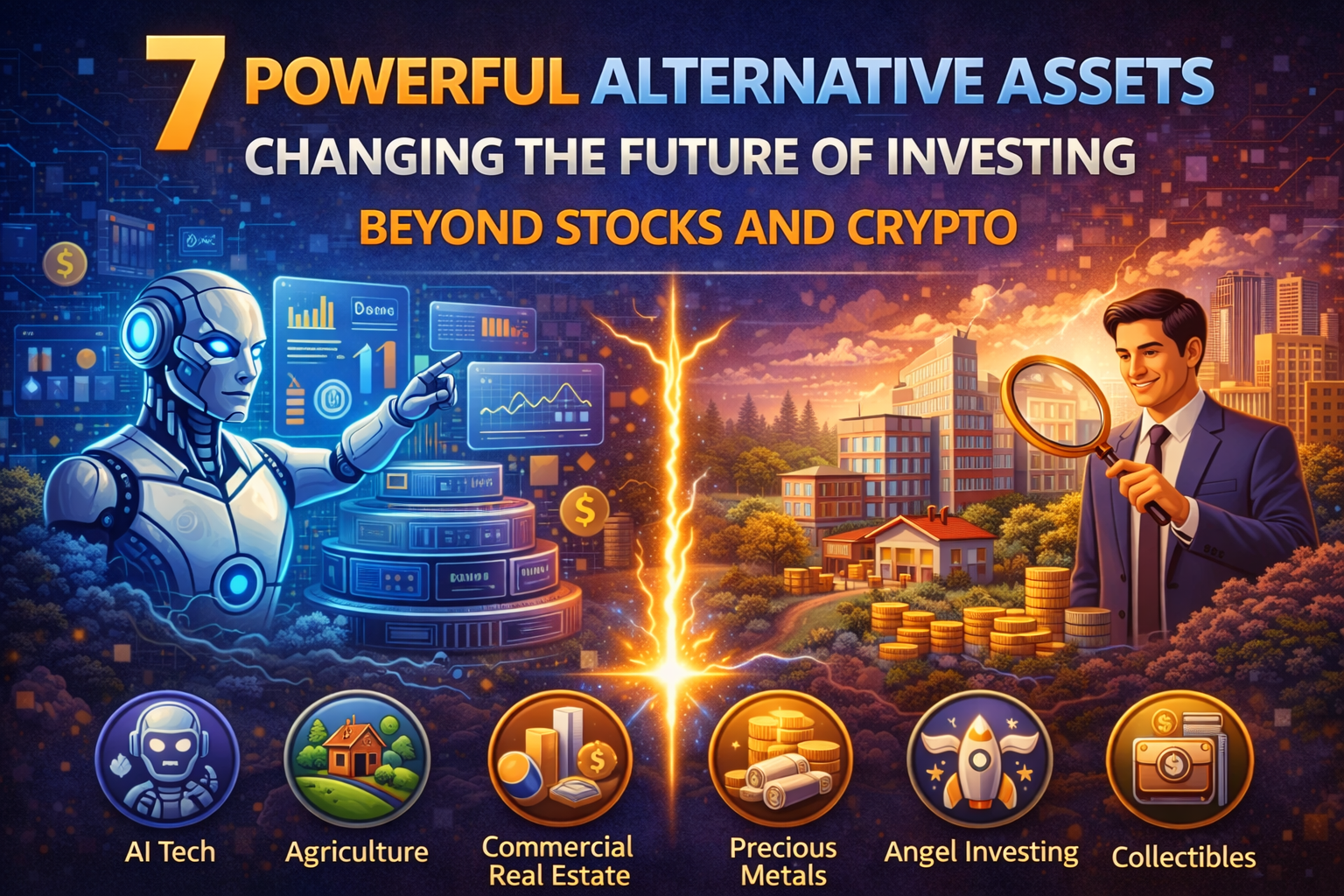
Discover the rise of alternative assets beyond stocks and crypto. Learn how investors are diversifying with real estate, commodities, collectibles, and more in 2026.
Table of Contents
Introduction
For decades, investing was simple.
👉 You either invested in stocks, bonds, or saved money in banks.
Then came crypto, disrupting traditional finance. But now, a new trend is emerging that’s even bigger:
👉 The rise of alternative assets.
Investors across the globe are moving beyond traditional options to diversify risk, increase returns, and protect wealth.
But what exactly are alternative assets—and why are they gaining so much attention?
Let’s break it down.
What Are Alternative Assets?
Alternative assets are investments that fall outside traditional categories like:
- Stocks
- Bonds
- Cash
They include:
- Real estate
- Commodities
- Private equity
- Art and collectibles
- Digital assets beyond crypto
👉 In simple terms: Anything that is not traditional finance is an alternative asset.
📌 Learn more:
https://www.investopedia.com/terms/a/alternative_investment.asp
Why Alternative Assets Are Rising
Several global trends are driving this shift:
📉 Market Volatility
Stock markets are becoming unpredictable.
💸 Inflation
Traditional savings are losing value.
🌍 Global Uncertainty
Economic and geopolitical risks are increasing.
👉 Investors want assets that are stable, diverse, and resilient.
📌 Inflation impact explained:
https://www.imf.org/en/Topics/inflation
1. Real Estate: The Classic Alternative
Real estate remains one of the most popular alternative assets.
Why?
- Generates rental income
- Appreciates over time
- Acts as an inflation hedge
👉 Even digital real estate (like REITs) is growing rapidly.
📌 Real estate investing basics:
https://www.investopedia.com/terms/r/realestate.asp
2. Commodities: Gold, Oil, and Beyond
Commodities include:
- Gold
- Silver
- Oil
- Agricultural products
👉 These assets often perform well during inflation and economic uncertainty.
Gold, in particular, is considered a safe-haven asset.
📌 Commodity investing:
https://www.worldbank.org/en/research/commodity-markets
3. Private Equity and Startups
Instead of investing in public companies, investors are now funding:
- Startups
- Private businesses
👉 This offers:
- High return potential
- Early access to innovation
But it also comes with higher risk.
📌 Private equity explained:
https://www.investopedia.com/terms/p/privateequity.asp
4. Collectibles: Passion Meets Investment
Surprisingly, assets like:
- Art
- Watches
- Rare coins
- Sneakers
…are becoming serious investments.
👉 Some collectibles outperform traditional assets.
But:
- They require expertise
- Liquidity is limited
5. Infrastructure Investments
Investors are putting money into:
- Roads
- Airports
- Renewable energy
👉 These assets provide:
- Stable income
- Long-term growth
📌 Infrastructure finance:
https://www.worldbank.org/en/topic/infrastructure
6. Digital Assets Beyond Crypto
While crypto is popular, new digital assets are emerging:
- NFTs
- Tokenized assets
- Digital ownership platforms
👉 These represent the future of ownership and investment.
📌 Digital asset trends:
https://www.bis.org/publ/arpdf/ar2022e3.htm
7. Hedge Funds and Alternative Strategies
Advanced investors use:
- Hedge funds
- Derivatives
- Arbitrage strategies
👉 These aim to generate returns regardless of market direction.
Benefits of Alternative Assets
✅ Diversification
Reduce dependence on stock markets
✅ Inflation Protection
Preserve value during economic instability
✅ Higher Return Potential
Access unique opportunities
Risks You Should Know
Alternative assets are powerful—but not perfect.
⚠️ Low Liquidity
Harder to buy/sell quickly
⚠️ High Risk
Some investments are volatile
⚠️ Complexity
Requires deeper understanding
👉 Not all alternative assets are suitable for beginners.
Who Should Invest in Alternative Assets?
Alternative assets are ideal for:
- Long-term investors
- High-net-worth individuals
- Those seeking diversification
👉 Beginners should start small and learn gradually.
The Future of Investing
The investment world is changing rapidly.
👉 The future is not:
- Stocks vs crypto
👉 It’s:
- A diversified portfolio including alternative assets
Institutional investors are already shifting toward alternatives.
Now, retail investors are following.
Conclusion
The rise of alternative assets is not just a trend—it’s a transformation.
👉 Investors are no longer relying on traditional methods.
They are exploring new opportunities to:
- Grow wealth
- Reduce risk
- Adapt to a changing world
Final Thought
If you want to stay ahead in investing, ask yourself:
- Am I diversified enough?
- Am I exploring new opportunities?
- Am I prepared for the future of finance?
Because in the coming years:
👉 Those who understand alternative assets will have a major advantage.
Will governments control your money in the future? Explore CBDCs, digital payments, and the growing influence of governments over personal finances in 2026.
